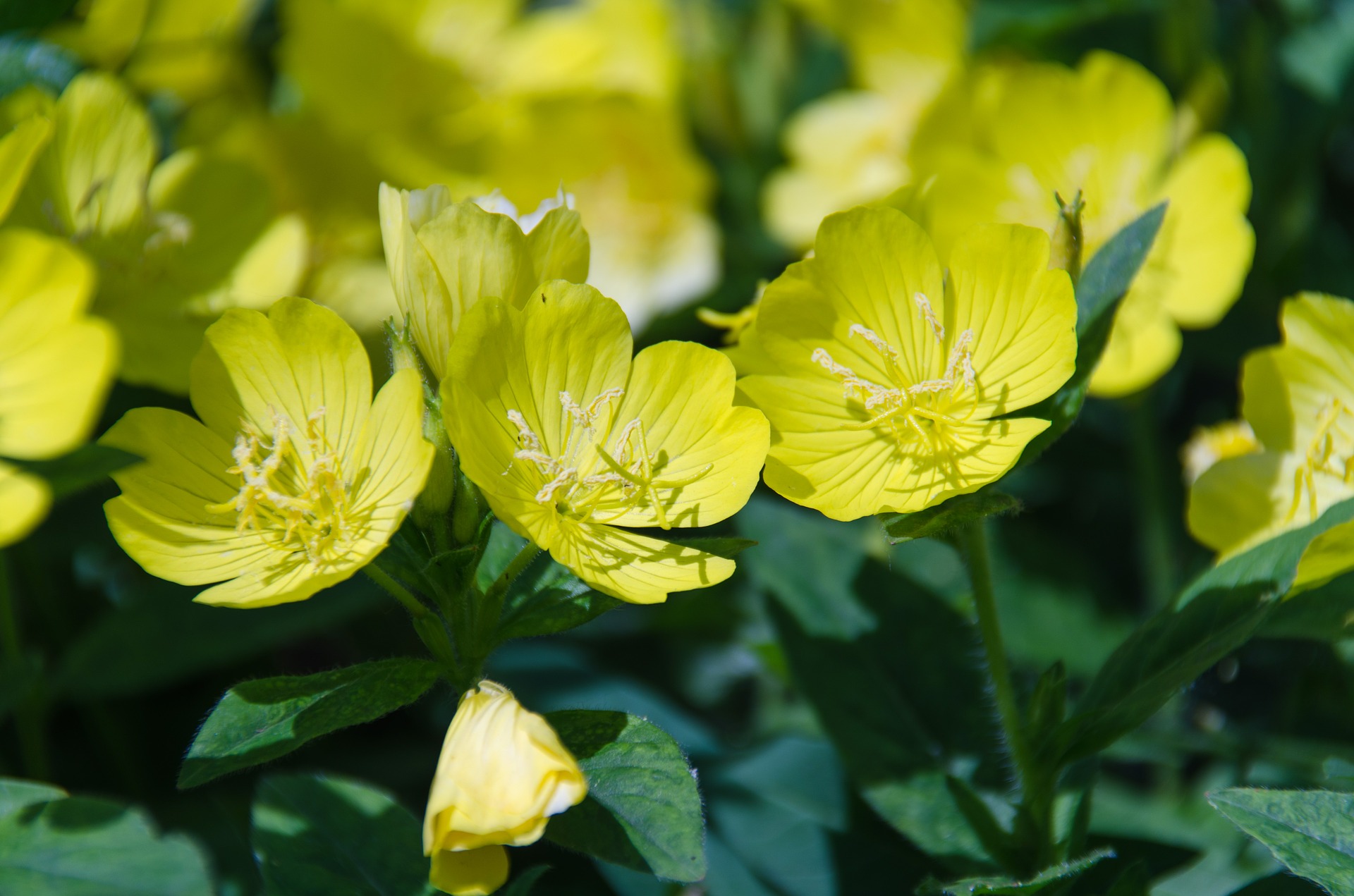
The evening primrose (Oenothera) is known for its beautiful, yellow flowers and has traditionally been found in North and South America, but is now found in many countries. Evening primrose oil is rich in gamma linolenic acid (GLA). GLA is an unsaturated omega-6 fatty acid, which hardly occurs in the diet and is formed in the body from (cis) linoleic acid. Often this conversion takes place to a limited extent so that fewer eicosanoids (local hormone-like substances) of the favorable type 1 are formed. Factors that can play a role here are too high a consumption of trans fatty acids, saturated fats, sugar, alcohol and carbohydrates and a shortage of essential nutrients involved in this conversion (magnesium, vitamin B6, niacin, zinc, magnesium, selenium, vitamin C, vitamin E). Not everyone converts the enzyme delta-6-desaturase, which converts linoleic acid into GLA, to the same extent. In the elderly, for example, the enzyme is present to a lesser extent.
GLA has an anti-inflammatory and immunomodulatory effect, inhibits unnecessary aggregation of platelets, helps combat atherosclerosis, supports the health of joints, bones, and skin, promotes a normal and regular female cycle, is good for nerve tissue, promotes normal cell division and is beneficial for the spiritual balance. GLA also contributes to normal blood pressure and healthy cholesterol levels.
Signs of a possible shortage
Presumably, this is noticeable by dry skin and a higher risk of chronic inflammatory diseases.
Indications
There are many many benefits from the evening primrose.
Just to sum up a few, here is a list of all the health problems it may help to improve.
- PMS (premenstrual syndrome)
- rheumatoid arthritis
- atopic eczema
- improve skin barrier function and dry skin in the elderly
- psoriasis
- asthma
- hay fever
- stress (less good conversion of linoleic acid into GLA)
Contraindications
Do not use high doses of GLA during pregnancy or lactation due to lack of safety data. Be careful with GLA when using anticoagulants and antiplatelet therapy as GLA inhibits platelet aggregation and can prolong bleeding time.
Use advice
Maintenance dose: 250-500 mg GLA per day
General therapeutic dose *: up to 2800 mg GLA per day
Rheumatism: 450-2000 mg GLA per day
Atopic eczema **: 360-920 mg GLA per day (children under 18 years 360-460 mg GLA per day)
 aimesforhealth