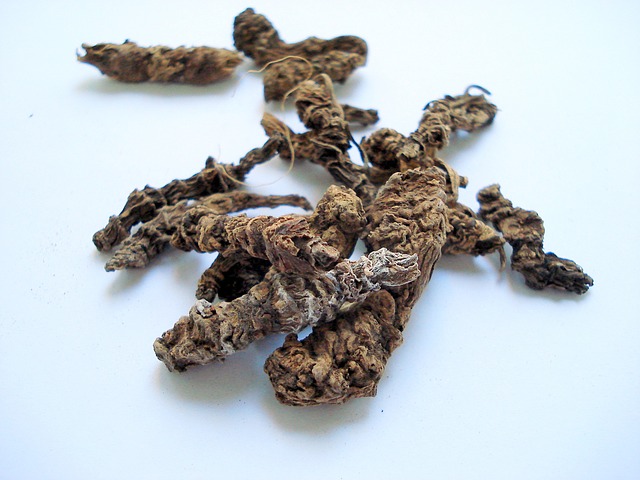
What is Valerian root?
Valerian root has been the go-to remedy for centuries as a herbal-based sleeping aid. Valerian calms the nervous system and relaxes the mind, making it an ideal herb to induce sleep and hold on to it.
Valerian root is a perennial plant that occurs in Europe and Asia. The plant grows about 1.2 meters high and produces clusters with sweet-smelling, trumpet-shaped flowers. The roots are used medicinally both fresh and dried. When dried, the roots produce a strong smell, similar to the smell of sweat socks.
Valerian is already used medically since Roman times, where it was used to treat anxiety, tension headaches, digestive problems, and sleep disorders. Scientific research on Valerian has confirmed that it can indeed reduce anxiety and induce drowsiness, although the actual chemical components behind these effects are still not fully understood.
The effects of valerian root
Valerian is a slightly calming herb with soothing and relaxing properties. The effects are subtle but very effective. The name Valerian comes from the Latin word Valere, which means “to be strong and healthy”.
Valerian is most commonly used as a sedative. People with sleep disorders are generally divided into two groups; those who have difficulty falling asleep and those who have difficulty staying asleep. These problems can occur simultaneously or separately, depending on individual circumstances. Valerian is, however, often used for both types of sleep disorders, because it improves both falling asleep and the duration of the sleep. Although sleep disorders can be linked to various other problems, such as alcohol abuse, caffeine-related overstimulation, depression or sleep apnea, the herbal approach is based on calming herbs, such as Valerian, passionflower and Californian poppy. In case of problems to stay asleep, Valerian is often combined with St. John’s Wort to further improve the quality of sleep, but also for a better mood.
The non-addictive and safe nature of Valerian has made this drug very popular and easy to use for those who become anxious in social situations, or just need to be more comfortable. Valerian is often used with other herbs to strengthen this characteristic. For example, it is not uncommon to combine Valerian with Blue Glidewort (Skullcap) because these two herbs produce good synergy to relieve tension and soothe the mind.
It should be noted that although the main effect of Valerian is its calming effect, it has an opposite effect on a small number of people and therefore has a stimulating effect. So if you want to start using Valerian because of the soothing effects, for this reason, you should take a small dose the first time to discover what the effect is on you personally.
A short list of all the complications it may benefit:
- Insomnia due to various causes
- Stress, nervous tension, restlessness, anxiety
- Obsessive-compulsive disorder
- Intestinal cramps, nervous upset stomach
- Dysmenorrhea
- Menopausal hot flashes
- Tension headache
- Restless legs syndrome
- ADHD
The usage
The dose and frequency can be adjusted, depending on which Valerian is used. To reduce anxiety and tension, smaller dosages can be taken throughout the day. As a sedative, a cup of tea or a few drops of a tincture can be taken shortly before bedtime.
There are several ways to take Valerian: Capsules, tinctures or tea. When you use carrot, making tea is the easiest, although making your own tincture is not difficult either.
Possible side effects
Valerian is not considered to be toxic or dangerous at the recommended dosage. There is also no evidence of unwanted side effects when used during pregnancy. However, if you suffer from a pre-existing condition, it is wise to first seek medical advice.
Due to the calming effects of Valerian, you should not drive cars or use heavy machinery.
It is rare, but some of the sedative ingredients in Valerian work as a stimulant, so one must first start with a small dose to find out how their body responds.
There have been reports of stomach irritations, headaches, and other mild side effects. In clinical trials, however, no hard evidence has been found and these side effects are often the result of other factors. This gives the impression that Valerian may interact with other medications, although this hasn’t been proven either because clinical tests show no significant interactions.
 aimesforhealth